Bhagwan Mahavira Swami: Divine Life, Eternal Philosophy and Historical Veracity
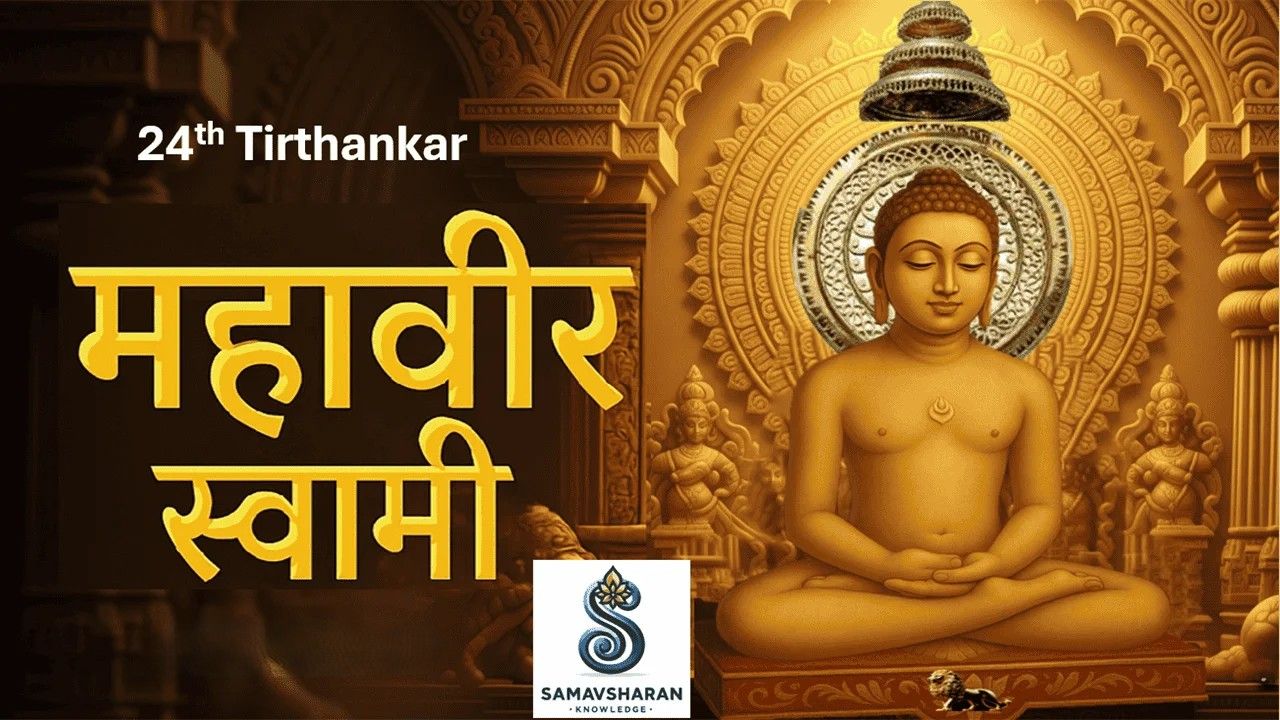
The 24th Tirthankara: An Eternal Beacon and Historical Truth
Jai Jinendra!
Bhagwan Mahavira Swami, the 24th and concluding Tirthankara of the current descending time cycle (Avasarpiṇī) according to Jain philosophy, stands not only as a supreme spiritual beacon but also as an academically documented, historically verified personality. In accordance with the Jain tradition, Bhagwan Mahavira’s life serves as an eternal testament to the reality that through pure spiritual exertion (Purushartha) and rigorous penance, an ordinary soul can transcend karmic bondage and achieve supreme divinity (Paramatman).
This comprehensive exposition examines Bhagwan Mahavira Swami’s historical and archaeological evidence, his sacred birthplace, his divine life journey, the celestial assembly (Samavasarana), and his timeless philosophical tenets.
1. Historical Framework and Earliest Archaeological Evidence
Bhagwan Mahavira's historical existence is corroborated not only across Jain canonical texts but also through early Buddhist literature, pre-Ashokan epigraphy, and modern stratigraphic excavations.
- The Badli Inscription (Rajasthan): Discovered at the Bhilot Mata temple near Badli in the Ajmer district of Rajasthan, this ancient Brahmi inscription represents a vital milestone in Indian epigraphy. Recording the year Vira Nirvana Samvat 84, it dates to the 5th century BCE—predating the edicts of Maurya Emperor Ashoka. This epigraph provides the earliest direct archaeological verification of Bhagwan Mahavira’s historicity and confirms the antiquity of the Vira Nirvana dating era.
- Northern Black Polished Ware (NBPW) Culture: Archaeological strata at Vaishali (Raja Vishal ka Garh) have revealed extensive NBPW artifacts dating approximately to 700–200 BCE. This material culture aligns with India's second urbanization, demonstrating that the region was a flourishing, fortified, and politically stable urban center capable of sustaining an influential Kshatriya clan during the 6th century BCE.
- The "Vaisalinamakunde" Terracotta Seal: Unearthed during the 1913–14 excavations led by archaeologist Dr. D.B. Spooner at Vaishali, this clay seal bears the Brahmi legend “Vaisalinamakunde” ("in the Kund of Vaishali"). This find archaeologically cements the spatial link between the locality named Kunda (Kundagrama/Kshatriyakunda) and the greater metropolitan confederacy of Vaishali.
3. The Birthplace Discourse: Evidence Supporting Kundpur (Basokund, Vaishali)
Scholarly and religious discourse regarding Bhagwan Mahavira's exact birthplace has historically centered around three primary sites: Vaishali (Basokund), Nalanda (Kundalpur), and Lachhuar (Jamui). In historical methodologies, chronological proximity of textual records and stratified physical evidence are paramount. Most historians identify Lachhuar with his austere penance rather than his birth, while claims for Nalanda stem largely from later medieval commentaries. The earliest Digambara canonical texts firmly identify Basokund (Kundpur/Kundagrama), situated within the greater Vaishali territory, as the authentic site.
Key Digambara Canonical and Literary Citations
- Acharya Yativrishabha’s Tiloyapaṇṇatti (5th–6th Century CE): One of the oldest extant Digambara treatises on Karananuyoga explicitly records:
Jammaṁ kuṇḍapure ṇāya-kula-vaṁsa-vibhūsaṇe. Titthayarassa vīrassa ṇāya-rāeṇa posio॥ (Chapter 4, Gatha 1489) (Translation: "The ornament of the Jñātṛ clan, the Tirthankara Vira, was born in Kundapura, fostered by the Jñātṛ king.")
- Acharya Jinasena’s Harivamsha Purana (Saka Samvat 705 / 783 CE):
Kuṇḍalapurapuraṁ ramyaṁ bahu-ratna-samākulam. Yasmiñjāto mahāvīraḥ sarva-loka-sukhāvahaḥ॥ (Canto 2, Shloka 58) (Translation: "In that delightful and gem-filled city of Kundalapura, Bhagwan Mahavira, the benefactor of the entire cosmos, was born.")
- Acharya Gunabhadra’s Uttara Purana (9th Century CE):
Tataḥ kuṇḍapure tasmin garbhakalyāṇa-savidhe. Indrājñayā dhanādhyakṣo nyaṣīdad ratnasaṁcayam॥ (Parva 74, Shloka 253) (Translation: "Thereafter, as the Garbha Kalyanak drew near, Kubera, by the command of Indra, showered piles of celestial gems upon the city of Kundapura.")
Correlating these textual citations with the geographic descriptions of Videha and the archaeological provenance of the Vaisalinamakunde seal indicates that Basokund near Vaishali is the historic Kundpur/Kundagrama.
4. The Divine Life: Childhood, The Five Names, and Digambara Renunciation
In the Digambara tradition, Bhagwan Mahavira remained a lifelong celibate (Bal Brahmachari); he renounced the world without entering into householder matrimony.
- Garbha and Janma Kalyanak: On the 13th day of the bright half of Chaitra (Chaitra Shukla Trayodashi) in 599 BCE, the future Tirthankara was born to King Siddhartha of the Nath/Jñātṛ Kshatriya clan and Queen Trishala (Priyakarini) at Kundpur. Saudharma Indra conveyed the infant to Pandukavana on Mount Sumeru, performing the ceremonial birth ablution (Janmabhisheka) using 108 celestial pitchers filled with water from the Kshirasagara.
- The Five Meaningful Names:
- Vira: Bestowed for exhibiting innate spiritual fortitude and valor from birth.
- Vardhamana: Signifying the continuous rise in prosperity, wisdom, and virtue across the realm since his conception.
- Sanmati: Conferred when his innate spiritual demeanor resolved the theological doubts of sages Sanjay and Vijay during his childhood.
- Mahavira: Given after he subdued a ferocious serpent manifest by the deity Sangama, maintaining unflinching equanimity.
- Ativira: Assigned in his youth after he brought a rogue, intoxicated elephant under complete control through sheer spiritual presence.
- Renunciation and Austerities: At the age of 30, recognizing the transient nature of worldly existence, he renounced his princely status. On Margashirsha Krishna Dashami, he initiated into the unclad, possessionless Digambara monastic order (Jaineshwari Diksha). For twelve continuous years, he observed absolute silence, enduring severe physical afflictions (upasargas) and bodily mortifications with complete inner equilibrium (samata).
5. Kevalajnana, Samavasarana, and The Divine Discourse
Following twelve years of profound introspection and ascetic rigor, on Vaishakha Shukla Dashami, beneath a Sala tree on the banks of the River Rijukula near Jrimbhikagrama, Bhagwan Mahavira attained Kevalajnana (omniscience), realizing the four infinite attributes (Ananta Chatushthaya): Infinite Perception, Infinite Knowledge, Infinite Bliss, and Infinite Power.
- The Celestial Assembly (Samavasarana): Upon his attainment of omniscience, the celestial architect Kubera, acting under Indra's direction, erected the vast, circular assembly hall spanning twelve yojanas.
- Universal Harmony: The Samavasarana featured twelve distinct concentric enclosures where ascetics, nuns, heavenly beings, human householders, and naturally antagonistic animals (such as lions and cows) sat side by side, devoid of instinctual enmity.
- The Divine Sound (Omkar Dhvani): Bhagwan Mahavira’s teachings emanated as a spontaneous, syllable-free resonant sound (Nirakshari Omkar Dhvani). His chief disciple (Gandhara), Indrabhuti Gautama, comprehended and structured these divine vibrations into the twelve canonical angas (Dvadashanga Jinavani).
6. The Eternal Philosophy: Five Mahavratas and Anekantavada-Syadvada
Bhagwan Mahavira did not establish an unprecedented creed; rather, he revitalized and clarified the timeless, beginningless principles of Jain metaphysics:
| Principle | Philosophical and Practical Essence |
|---|---|
| Ahimsa (Non-violence) | Absolute non-injury in thought (manas), word (vachana), and physical action (kaya) toward all sentient life (Parasparopagraho Jivanam). |
| Satya (Truth) | Articulating speech that is factually accurate, wholesome, gentle, and spiritually uplifting. |
| Asteya (Non-stealing) | Strict abstinence from taking or claiming anything that has not been explicitly granted. |
| Brahmacharya (Chastity) | Total subjugation of sensual desires and steadfast dwelling within the pure nature of the self. |
| Aparigraha (Non-possession) | Voluntary limitation of material possessions and inner detachment from accumulated wealth and worldly objects. |
- Anekantavada and Syadvada: Anekantavada asserts that reality is multifaceted and possesses infinite attributes (ananta-dharmatmakam vastu). Syadvada is its linguistic expression, qualifying statements from specific contextual perspectives (nayas). Together, they form an intellectual framework for non-violence, eliminating dogmatism and fostering peaceful coexistence amid ideological diversity.
7. Nirvana, The First Historical Record of Deepawali, and Contemporary Relevance
At the age of 72, at dawn on the day of Kartika Krishna Amavasya, Bhagwan Mahavira shed his remaining physical and karmic sheaths at Pawapuri (modern Bihar), attaining unconditioned liberation (Moksha). On the evening of that very day, his principal Gandhara, Gautama Swami, attained Kevalajnana.
- Earliest Record of Deepawali in Harivamsha Purana: The earliest explicit historical documentation of the festival of Deepawali appears in Canto 66 of Acharya Jinasena’s Sri Harivamsha Purana (8th Century CE):
Jvalatpradīpālikayā pravṛddhayā surāsuraiḥ pūjitayā pradīptayā. Tadā hi pāvāpuriyā ca sarvato vinirmitā dīpaśikhābhirujjvalā॥ Tatastu lokaḥ prativarṣamādarāt prasiddhadīpālikayātra bhārate. Samudyataḥ pūjayituṁ jineśvaraṁ jinendra-nirvāṇa-vibhūti-bhaktibhāk॥ (66/20–21) (Translation: "When Bhagwan Mahavira attained Nirvana at Pawapuri, the assemblies of celestials and humans illuminated rows of brilliant oil lamps to signify that the light of supreme knowledge should not be lost to darkness. Ever since that occasion, the people of Bharata celebrate this festival of Deepawali year after year to venerate the Jinendra on the glorious occasion of his Nirvana.")
Contemporary Relevance
In an era fraught with ecological destruction, international conflict, and unbridled consumerism, Bhagwan Mahavira’s tenets provide concrete solutions. Ahimsa establishes the ethical foundation for planetary and environmental preservation; Aparigraha addresses resource depletion and unsustainable wealth disparities; and Anekantavada offers the philosophical blueprint for intercultural dialogue and lasting peace.
Bhagwan Mahavira’s path of disciplined self-mastery, equanimity, and reverence for all living beings remains an enduring beacon of spiritual liberation and universal harmony.
Discussion
No comments yet. Be the first to start the discussion!